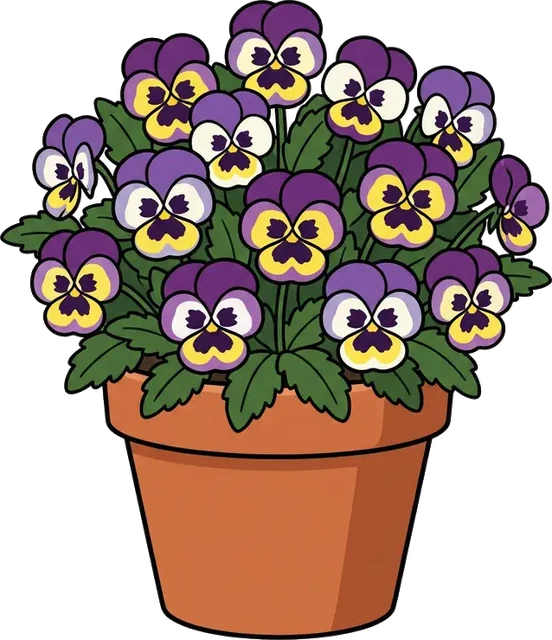
Pansy
Viola wittrockiana, herbaceous, semi-deciduous
DifficultyModerate
Pansy: water it when the soil is dry a few centimetres down. It wants partial shade, 2 to 6 hours of sun a day, and starts to suffer below −18 °C (0 °F).
Updated 12 October 2026. How we write these pages
Pansy at a glance
Water
When the soil is dry a few centimetres down.
In a pot indoors: 4–11 days in summer, 7–18 in winter.
Month by month
Minimum temperature
−18 °C
It starts to suffer between −23 and −18 °C (−9–0 °F).
Growth
Steady.
Repotting
When the roots fill the pot or the soil has broken down.
Pruning
Remove faded flowers.
Where does your plant live?
Pick its place and see what changes.


What changes
- Indoors, near the window. Fine, as long as the hot midday sun doesn’t fall straight on the leaves.
- Indoors, away from the window. With less light it grows more slowly. If you can, move the pot closer to the window.
- Outdoors, in the shade. Fine, as long as it gets at least 2 hours of sun a day.
- Outdoors, in the sun. Full sun all day is too much. Move the pot where the hottest hours are in shade.
- Indoors, summer. In July it usually needs water every 4–11 days. Heat dries the soil faster, so feel it more often.
- Indoors, winter, heating on. In January it usually needs water every 7–18 days, and more often near a radiator, because warm air dries the soil.
- Indoors, winter, cool room. In January it usually needs water every 7–18 days, and less often in a cool room, where the soil stays damp for a long time.
- Outdoors, summer. Outside the soil dries faster than indoors, where in July it needs water every 4–11 days, so in the sun feel it often.
- Outdoors, winter. It takes frost, but in a pot the roots feel the cold from every side, so on the hardest nights move the pot under shelter.
- Outdoors, winter. In the cold the soil stays damp for a long time, so it needs water less often than indoors, where in January it needs water every 7–18 days.
Pansy: how often to water
For a pot kept indoors, month by month. Tap a column.
In November
Every 6–17 days
Usually every 10 days. Feel the soil first, and water when it is dry a few centimetres down.
Every month in a table
| Month | Usually | Usually between |
|---|---|---|
| January | every 11 days | 7–18 days |
| February | every 11 days | 7–18 days |
| March | every 10 days | 6–16 days |
| April | every 9 days | 5–14 days |
| May | every 8 days | 5–12 days |
| June | every 7 days | 4–11 days |
| July | every 7 days | 4–11 days |
| August | every 7 days | 4–11 days |
| September | every 8 days | 5–12 days |
| October | every 9 days | 6–15 days |
| November | every 10 days | 6–17 days |
| December | every 11 days | 7–18 days |
Typical intervals for a pot kept indoors in the northern hemisphere. Outdoors, sun, wind and rain change them, so feel the soil. How to tell when to water, with a finger and the weight of the pot.
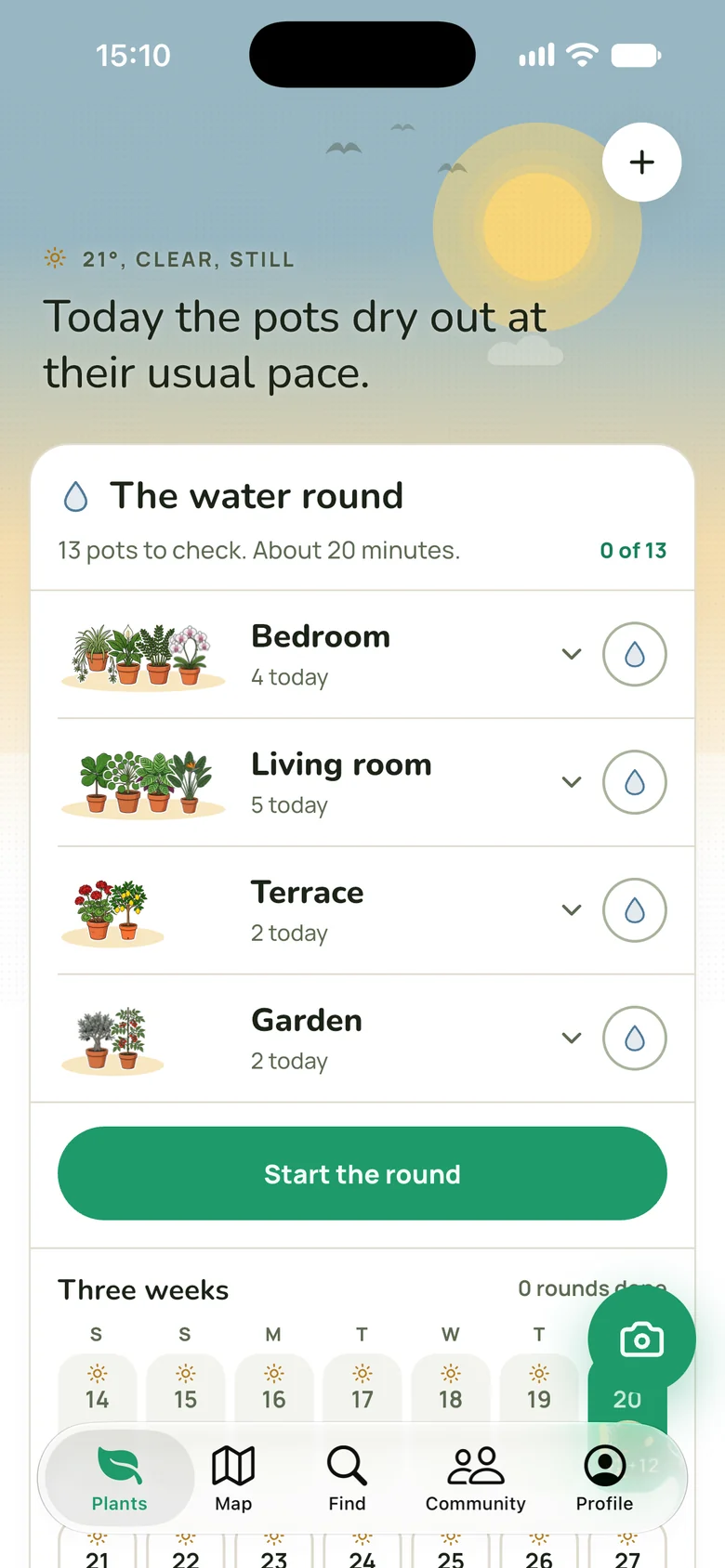
Every plant has its own rhythm. LINFA keeps track for you.
The days above are a guide: a pot in the sun dries faster than one in the shade. With LINFA you scan the place, see how much sun your plant gets and get an alert when it’s time to check it. If it turns yellow, a photo shows you the possible causes.



 Scan the code with your phone and the right store opens.

Soil, propagation and problems
Soil
An all-purpose potting mix that holds a little moisture but drains well: if it’s very dense, add some perlite. It isn’t fussy about pH.
Propagation
From seed: in spring, somewhere warm, with the soil kept barely damp.
Common problems
The most frequent: Slugs and snails · Caterpillars · Root rot · Spider mites · Thrips
When you feel the soil, look under the leaves too: pests show up there first.
Pansy: questions and answers
Pansy: how often to water in winter?
Less often than in summer: in the cold the soil stays damp for a long time. Feel it, and water when the soil is dry a few centimetres down.
Pansy: how can you tell when it needs water?
When the soil is dry a few centimetres down, not just on the surface.
Pansy: how much light does it need?
Partial shade: 2 to 6 hours of sun a day, without the full midday sun.
Pansy: how much cold can it take?
It starts to suffer from the cold somewhere between −23 and −18 °C (−9–0 °F). It takes frost, but in a pot the roots feel the cold from every side, so on the hardest nights move the pot under shelter.
Pansy: when to repot?
When the roots fill the pot or the soil has broken down.
Pansy: how to prune?
Pinch or snap off the faded flower with its stalk, between finger and thumb. On tough or stringy stems, use secateurs and cut just above the next bud or leaf.
Pansy: how can you tell if it’s getting too much water or too little?
Too much water often shows as leaves turning yellow, soft brown patches on the leaves and leaves drooping even though the soil is wet. Too little shows as leaves still drooping in the morning and leaves starting to curl or fold. Before you change how you water it, check these first. Feel the soil where the roots are, not just the surface. Damaged roots can’t take up water, so a plant can droop or shrivel even when it’s wet. Weather, pests and disease can cause the same signs. Losing some leaves as the seasons turn can be normal.
Pansy: what soil does it need?
An all-purpose potting mix that holds a little moisture but drains well: if it’s very dense, add some perlite. It isn’t fussy about pH.
Pansy: how to propagate?
From seed: in spring, somewhere warm, with the soil kept barely damp.
Pansy: which pests and diseases affect it?
The most frequent are slugs and snails, caterpillars, root rot, spider mites and thrips. When you feel the soil, look under the leaves too: pests show up there first.