How to repot a plant, and when
Repot a plant in spring, as it starts growing again, and only once the roots have filled the pot: they poke out of the drainage holes, or circle the bottom when you slide it out. Pick a pot with holes that’s only slightly bigger, 2.5 to 5 cm wider, and water as soon as you’ve finished.
Updated 12 October 2026. How we write these pages
When to repot plants
In spring, as it starts growing
Yes
It has the whole season ahead to grow new roots into the fresh potting mix.
In autumn and winter
Better to wait
The plant is barely growing, and fresh potting mix the roots haven’t reached yet stays wet for a long time.
Every year, out of habit
No
Repot when the roots have filled the pot. If you slide the plant out and still see plenty of soil around the roots, the pot is big enough.
How to tell if a plant needs a bigger pot
Roots growing out of the drainage holes, or showing on the surface, are the clearest sign. Slower clues are soil that dries out quickly even in cool weather, and a plant that barely grows even when you feed it in spring and summer.
To be certain, slide the plant out of its pot and look at the root ball. If the roots circle round the bottom, or are so dense you can hardly see any soil, it’s time to repot.
How to repot a plant, step by step
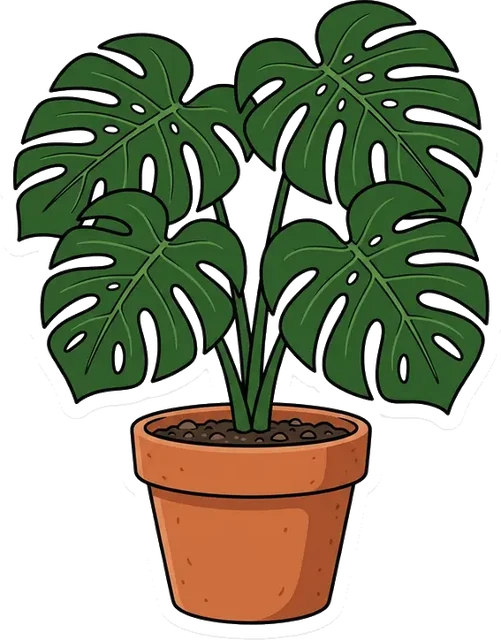
1. Slide it out
Hold it at the base of the stems.
Hold the pot with your other hand. If the plant is big, lay the pot on its side and ease the plant out slowly.
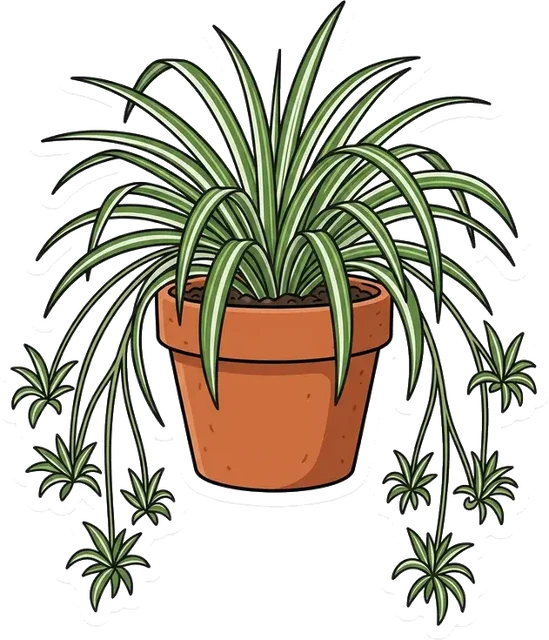
2. Look at the roots
Loosen the ones circling round.
Tease them apart with your fingers without tearing them. Cut off any that are soft and dark.
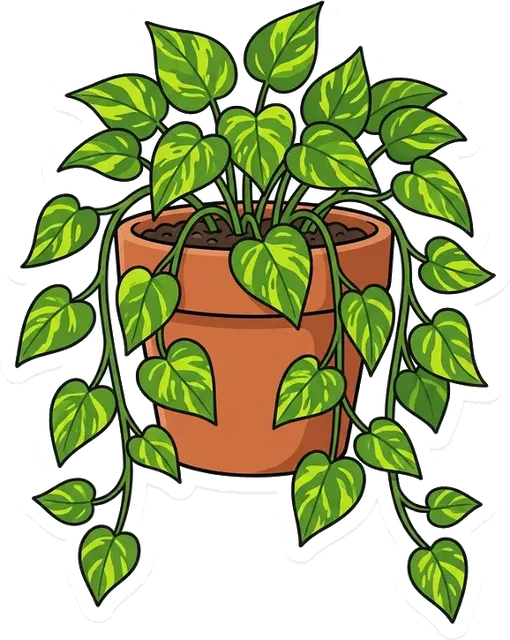
3. Put it in the new pot
With the root ball just below the rim.
Add a little fresh potting mix to the bottom, sit the root ball on it and fill in round the sides, firming gently, without burying the stems. Then water until it runs out of the holes.
Which pot to use when repotting
Slightly bigger
2.5 to 5 cm wider and deeper.
For pots up to 25 cm across. In a pot that’s much bigger, the soil the roots can’t reach stays wet for a long time.
With drainage holes
So extra water can run out.
A small square of mesh over the hole stops the soil washing out. A pot without holes works as an outer pot.
No gravel at the bottom
It doesn’t help water drain.
Water stops in the soil just above the gravel and stays there. Fill the pot with potting mix all the way down.
Questions about repotting
Can you repot a plant in autumn?
It’s better to wait until spring. In autumn and winter the plant barely grows, and fresh potting mix stays wet around the roots for a long time.
Why are the leaves turning yellow after repotting?
A few yellow leaves in the days after repotting are normal. Keep the plant in indirect light for a few days. If the new pot is much bigger than the old one, feel the soil before you water: it stays wet for longer.
How much bigger should the new pot be?
If the old pot is up to 25 cm across, the new one should be 2.5 to 5 cm wider and deeper. For bigger pots, no more than a third larger than the old one.
Should you water a plant after repotting?
Yes, straight away, until water runs out of the holes, so the fresh potting mix settles around the roots. After that, feel the soil before you water again.
Read next
Every plant has its own rhythm. LINFA keeps track for you.
It asks when you last repotted each plant and, once the usual gap between repottings has gone by, tells you to take a look at the roots.
Coming soon to Android