Jewelweed
Impatiens capensis, herbaceous
DifficultyModerate
Jewelweed: water it indoors every 3–8 days in summer and every 5–13 in winter, when the soil is dry a few centimetres down. It wants plenty of light but not the hot midday sun.
Updated 20 November 2026. How we write these pages
Jewelweed at a glance
Water, indoors
3–8
days in summer
5–13
days in winter
When the soil is dry a few centimetres down.
Month by month
Cats and dogs
Not toxic to dogs or cats.
Eating a lot of it can still upset their stomach.
Growth
Slow.
Feeding
Some, while it’s growing.
Follow the dose and frequency on your fertiliser’s label.
Repotting
When the roots fill the pot.
Pruning
Pinch out the shoot tips. Remove faded flowers.
Where does your plant live?
Pick its place and see what changes.

What changes
- Indoors, near the window. The light is right, as long as the hot midday sun doesn’t hit the leaves through the glass.
- Indoors, away from the window. With less light it grows more slowly and new leaves come in smaller. If you can, move the pot closer to the window.
- Outdoors, in the shade. This suits it: outdoors, bright shade is the light it likes best.
- Outdoors, in the sun. Full sun scorches its leaves, so move the pot into the shade, at least for the hottest hours.
- Indoors, summer. In July it usually needs water every 3–8 days. Heat dries the soil faster, so feel it more often.
- Indoors, winter, heating on. In January it usually needs water every 5–13 days, and more often near a radiator, because warm air dries the soil.
- Indoors, winter, cool room. In January it usually needs water every 5–13 days, and less often in a cool room, where the soil stays damp for a long time.
- Outdoors, summer. Outside the soil dries faster than indoors, where in July it needs water every 3–8 days, so in the sun feel it often.
- Outdoors, winter. In the cold the soil stays damp for a long time, so it needs water less often than indoors, where in January it needs water every 5–13 days.
Jewelweed: how often to water
Indoors, month by month. Tap a column.
In November
Every 4–12 days
Usually every 7 days. Feel the soil first, and water when it is dry a few centimetres down.
Every month in a table
| Month | Usually | Usually between |
|---|---|---|
| January | every 8 days | 5–13 days |
| February | every 8 days | 5–13 days |
| March | every 7 days | 4–12 days |
| April | every 6 days | 4–10 days |
| May | every 6 days | 3–9 days |
| June | every 5 days | 3–8 days |
| July | every 5 days | 3–8 days |
| August | every 5 days | 3–8 days |
| September | every 6 days | 3–9 days |
| October | every 6 days | 4–10 days |
| November | every 7 days | 4–12 days |
| December | every 8 days | 5–13 days |
Typical intervals indoors in the northern hemisphere: light, the pot and the season stretch or shorten them. How to tell when to water, with a finger and the weight of the pot.
Every plant has its own rhythm. LINFA keeps track for you.
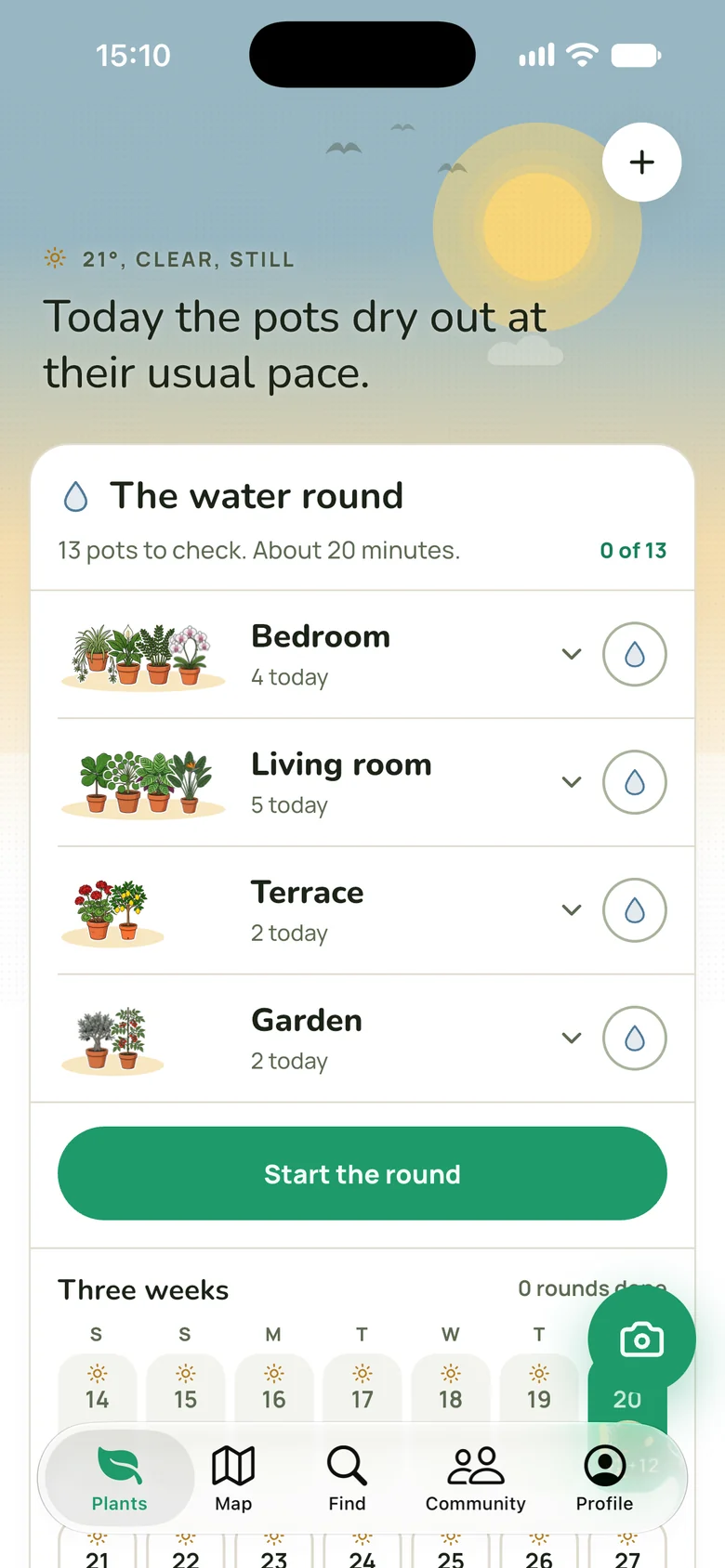
The days above are a guide: a pot in the sun dries faster than one in the shade. With LINFA you scan the place, see how much sun your plant gets and get an alert when it’s time to check it. If it turns yellow, a photo shows you the possible causes.



 Scan the code with your phone and the right store opens.

Jewelweed: questions and answers
Jewelweed: how often to water in winter?
Indoors in January, usually every 8 days (between 5 and 13), compared with every 5 in July. The longest gaps run from December to February.
Jewelweed: how can you tell when it needs water?
When the soil is dry a few centimetres down, not just on the surface.
Jewelweed: how much light does it need?
Plenty of light, without the direct midday sun, which can scorch the leaves. Indoors it does well near a bright window, and further from the window it grows more slowly.
Is Jewelweed toxic to cats and dogs?
Not toxic to dogs or cats. Eating a lot of it can still upset their stomach.
Jewelweed: when to repot?
When the roots fill the pot. If needed, the best time is spring, when it starts growing again.
Jewelweed: how to prune?
On leggy plants, pinch or snip off the top of each stem: new growth sprouts lower down. Pinch or snap off the faded flower with its stalk, between finger and thumb. On tough or stringy stems, use secateurs and cut just above the next bud or leaf.
Jewelweed: how can you tell if it’s getting too much water or too little?
Too much water often shows as leaves turning yellow, soft brown patches on the leaves and leaves drooping even though the soil is wet. Too little shows as leaves still drooping in the morning and leaves starting to curl or fold. Before you change how you water it, check these first. Feel the soil where the roots are, not just the surface. Damaged roots can’t take up water, so a plant can droop or shrivel even when it’s wet. Weather, pests and disease can cause the same signs. Losing some leaves as the seasons turn can be normal.