Common Ivy
Hedera helix, climber, evergreen
Common Ivy: water it when the soil is dry a few centimetres down. It wants full sun, as many hours as it can get, and starts to suffer below −32 °C (−26 °F).
Updated 12 October 2026. How we write these pages
Common Ivy at a glance
Water
When the soil is dry a few centimetres down.
In a pot indoors: 4–11 days in summer, 7–18 in winter.
Month by month
Minimum temperature
−32 °C
It starts to suffer between −34 and −32 °C (−29–−26 °F).
Cats and dogs
Toxic to dogs and cats.
Chewing the leaves can make them ill: keep it out of their reach.
Growth
Fast. It’s a climber.
Feeding
Some, while it’s growing.
Follow the dose and frequency on your fertiliser’s label.
Repotting
When the roots fill the pot.
Pruning
No regular pruning needed. If it gets too big, cut back the tallest branches before it starts growing again.
Where does your plant live?
Pick its place and see what changes.
What changes
- Indoors, near the window. The right spot: in front of the brightest window, with as many hours of sun as it can get.
- Indoors, away from the window. There isn’t enough light here. Move the pot in front of the brightest window.
- Outdoors, in the shade. Shade doesn’t give it enough light. Move the pot where the sun reaches it for longer.
- Outdoors, in the sun. The right spot, with all the sun it needs.
- Indoors, summer. In July it usually needs water every 4–11 days. Heat dries the soil faster, so feel it more often.
- Indoors, winter, heating on. In January it usually needs water every 7–18 days, and more often near a radiator, because warm air dries the soil.
- Indoors, winter, cool room. In January it usually needs water every 7–18 days, and less often in a cool room, where the soil stays damp for a long time.
- Outdoors, summer. Outside the soil dries faster than indoors, where in July it needs water every 4–11 days, so in the sun feel it often.
- Outdoors, winter. It takes frost, but in a pot the roots feel the cold from every side, so on the hardest nights move the pot under shelter.
- Outdoors, winter. In the cold the soil stays damp for a long time, so it needs water less often than indoors, where in January it needs water every 7–18 days.
Common Ivy: how often to water
For a pot kept indoors, month by month. Tap a column.
In November
Every 6–17 days
Usually every 10 days. Feel the soil first, and water when it is dry a few centimetres down.
Every month in a table
| Month | Usually | Usually between |
|---|---|---|
| January | every 11 days | 7–18 days |
| February | every 11 days | 7–18 days |
| March | every 10 days | 6–16 days |
| April | every 9 days | 5–14 days |
| May | every 8 days | 5–12 days |
| June | every 7 days | 4–11 days |
| July | every 7 days | 4–11 days |
| August | every 7 days | 4–11 days |
| September | every 8 days | 5–12 days |
| October | every 9 days | 6–15 days |
| November | every 10 days | 6–17 days |
| December | every 11 days | 7–18 days |
Typical intervals for a pot kept indoors in the northern hemisphere. Outdoors, sun, wind and rain change them, so feel the soil. How to tell when to water, with a finger and the weight of the pot.
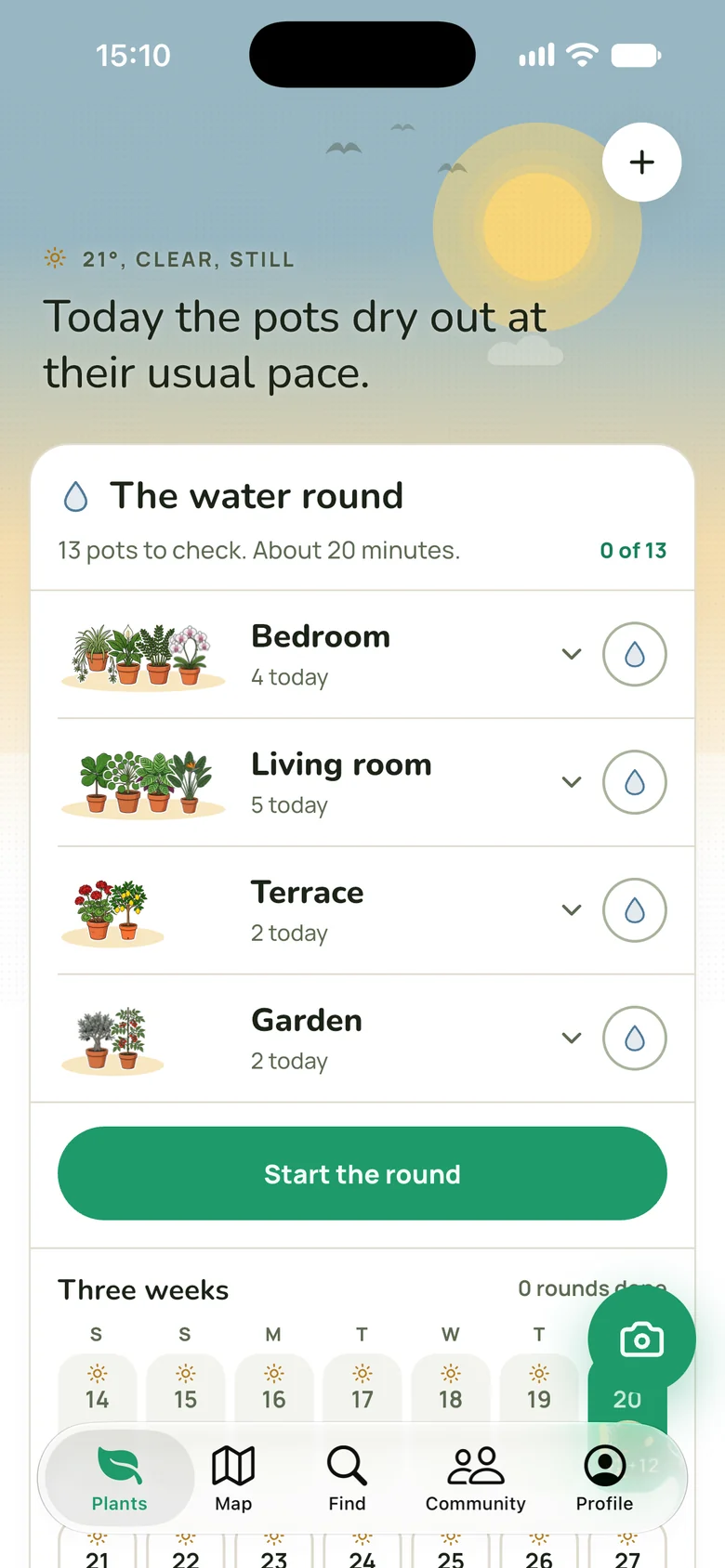
Every plant has its own rhythm. LINFA keeps track for you.
The days above are a guide: a pot in the sun dries faster than one in the shade. With LINFA you scan the place, see how much sun your plant gets and get an alert when it’s time to check it. If it turns yellow, a photo shows you the possible causes.



 Scan the code with your phone and the right store opens.

Soil, propagation and problems
Soil
An all-purpose potting mix that holds a little moisture but drains well: if it’s very dense, add some perlite. It also copes with a few days of wet soil. It isn’t fussy about pH.
Propagation
From a cutting: cut a piece of stem with at least one node and stand it in water or damp soil until it roots.
By division: when you repot it, split the plant into pieces that each have their own roots.
Common problems
The most frequent: Aphids · Caterpillars · Mealybugs · Scale insects · Spider mites · Canker
When you feel the soil, look under the leaves too: pests show up there first.
Common Ivy: questions and answers
Common Ivy: how often to water in winter?
Less often than in summer: in the cold the soil stays damp for a long time. Feel it, and water when the soil is dry a few centimetres down.
Common Ivy: how can you tell when it needs water?
When the soil is dry a few centimetres down, not just on the surface.
Common Ivy: how much light does it need?
As much sun as it can get. Full sun means at least 6 hours of direct sun a day.
Is Common Ivy toxic to cats and dogs?
Toxic to dogs and cats. Chewing the leaves can make them ill: keep it out of their reach.
Common Ivy: how much cold can it take?
It starts to suffer from the cold somewhere between −34 and −32 °C (−29–−26 °F). It takes frost, but in a pot the roots feel the cold from every side, so on the hardest nights move the pot under shelter.
Common Ivy: when to repot?
When the roots fill the pot.
Common Ivy: how to prune?
No regular pruning needed. Trim the longer shoots as much as you need to, to keep the plant within its space.
Common Ivy: how can you tell if it’s getting too much water or too little?
Too much water often shows as leaves turning yellow, soft brown patches on the leaves and leaves drooping even though the soil is wet. Too little shows as leaves still drooping in the morning and leaves starting to curl or fold. Before you change how you water it, check these first. Feel the soil where the roots are, not just the surface. Damaged roots can’t take up water, so a plant can droop or shrivel even when it’s wet. Weather, pests and disease can cause the same signs. Losing some leaves as the seasons turn can be normal.
Common Ivy: what soil does it need?
An all-purpose potting mix that holds a little moisture but drains well: if it’s very dense, add some perlite. It also copes with a few days of wet soil. It isn’t fussy about pH.
Common Ivy: how to propagate?
From a cutting: cut a piece of stem with at least one node and stand it in water or damp soil until it roots. By division: when you repot it, split the plant into pieces that each have their own roots.
Common Ivy: which pests and diseases affect it?
The most frequent are aphids, caterpillars, mealybugs, scale insects, spider mites and canker. When you feel the soil, look under the leaves too: pests show up there first.