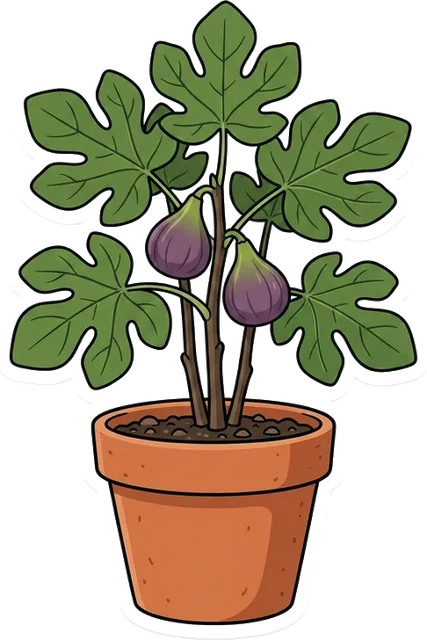
Common Fig
Ficus carica, tree, deciduous
DifficultyModerate
Common Fig: water it when the soil is dry a few centimetres down. It wants full sun, as many hours as it can get, and starts to suffer below −15 °C (5 °F).
Updated 12 October 2026. How we write these pages
Common Fig at a glance
Water
When the soil is dry a few centimetres down.
In a pot indoors: 4–12 days in summer, 7–19 in winter.
Month by month
Minimum temperature
−15 °C
It starts to suffer between −18 and −15 °C (0–5 °F).
Cats and dogs
Toxic to dogs and cats.
Chewing the leaves can make them ill: keep it out of their reach.
Growth
Fast. It’s a tree.
Feeding
Some, while it’s growing.
Follow the dose and frequency on your fertiliser’s label.
Repotting
When the roots fill the pot or the soil has broken down.
Pruning
Remove dead or damaged branches. Remove suckers and water shoots. Thin out crowded branches. Pinch out the shoot tips.
Where does your plant live?
Pick its place and see what changes.


What changes
- Indoors, near the window. The right spot: in front of the brightest window, with as many hours of sun as it can get.
- Indoors, away from the window. There isn’t enough light here. Move the pot in front of the brightest window.
- Outdoors, in the shade. Shade doesn’t give it enough light. Move the pot where the sun reaches it for longer.
- Outdoors, in the sun. The right spot, with all the sun it needs.
- Indoors, summer. In July it usually needs water every 4–12 days. Heat dries the soil faster, so feel it more often.
- Indoors, winter, heating on. In January it usually needs water every 7–19 days, and more often near a radiator, because warm air dries the soil.
- Indoors, winter, cool room. In January it usually needs water every 7–19 days, and less often in a cool room, where the soil stays damp for a long time.
- Outdoors, summer. Outside the soil dries faster than indoors, where in July it needs water every 4–12 days, so in the sun feel it often.
- Outdoors, winter. It takes frost, but in a pot the roots feel the cold from every side, so on the hardest nights move the pot under shelter.
- Outdoors, winter. In the cold the soil stays damp for a long time, so it needs water less often than indoors, where in January it needs water every 7–19 days.
Common Fig: how often to water
For a pot kept indoors, month by month. Tap a column.
In November
Every 7–18 days
Usually every 11 days. Feel the soil first, and water when it is dry a few centimetres down.
Every month in a table
| Month | Usually | Usually between |
|---|---|---|
| January | every 12 days | 7–19 days |
| February | every 12 days | 7–19 days |
| March | every 11 days | 6–17 days |
| April | every 9 days | 6–15 days |
| May | every 8 days | 5–13 days |
| June | every 8 days | 4–12 days |
| July | every 8 days | 4–12 days |
| August | every 8 days | 4–12 days |
| September | every 8 days | 5–13 days |
| October | every 10 days | 6–16 days |
| November | every 11 days | 7–18 days |
| December | every 12 days | 7–19 days |
Typical intervals for a pot kept indoors in the northern hemisphere. Outdoors, sun, wind and rain change them, so feel the soil. How to tell when to water, with a finger and the weight of the pot.
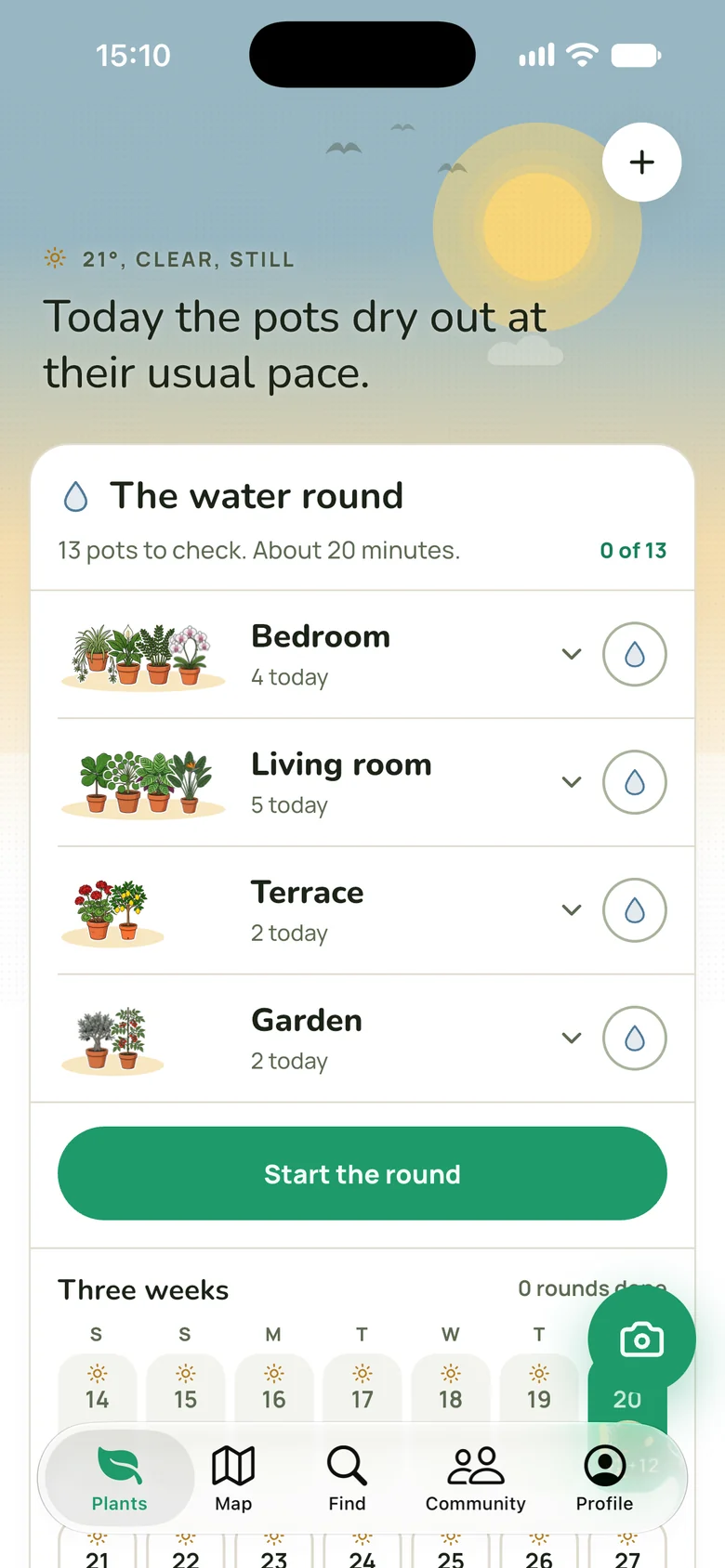
Every plant has its own rhythm. LINFA keeps track for you.
The days above are a guide: a pot in the sun dries faster than one in the shade. With LINFA you scan the place, see how much sun your plant gets and get an alert when it’s time to check it. If it turns yellow, a photo shows you the possible causes.



 Scan the code with your phone and the right store opens.

Soil, propagation and problems
Soil
An all-purpose potting mix that holds a little moisture but drains well: if it’s very dense, add some perlite. It likes it neutral or slightly acidic.
Propagation
From a cutting: cut a piece of stem with at least one node and stand it in water or damp soil until it roots.
By layering: let a stem grow roots while it’s still on the plant, then cut it below the roots and pot it.
Common problems
The most frequent: Aphids · Mealybugs · Nematodes · Scale insects · Spider mites · Leaf spot
When you feel the soil, look under the leaves too: pests show up there first.
Common Fig: questions and answers
Common Fig: how often to water in winter?
Less often than in summer: in the cold the soil stays damp for a long time. Feel it, and water when the soil is dry a few centimetres down.
Common Fig: how can you tell when it needs water?
When the soil is dry a few centimetres down, not just on the surface.
Common Fig: how much light does it need?
As much sun as it can get. Full sun means at least 6 hours of direct sun a day.
Is Common Fig toxic to cats and dogs?
Toxic to dogs and cats. Chewing the leaves can make them ill: keep it out of their reach.
Common Fig: how much cold can it take?
It starts to suffer from the cold somewhere between −18 and −15 °C (0–5 °F). It takes frost, but in a pot the roots feel the cold from every side, so on the hardest nights move the pot under shelter.
Common Fig: when to repot?
When the roots fill the pot or the soil has broken down. If needed, the best time is early spring. There are usually 2 years between repottings.
Common Fig: how to prune?
Remove dead or damaged branches. Take off the suckers that grow from the base of the tree or from the roots. Take out crossing branches and thin the top so it stays open, with the branches evenly spaced. Pinch out each new shoot once it has five or six leaves: the tree then puts more energy into fruit than into leaves. Keep cuts light, because figs bleed sap outside the winter rest.
Common Fig: how can you tell if it’s getting too much water or too little?
Too much water often shows as leaves turning yellow, soft brown patches on the leaves and leaves drooping even though the soil is wet. Too little shows as leaves drooping, leaves and buds dropping and young shoots drying out. Before you change how you water it, check these first. Feel the soil where the roots are, not just the surface. Damaged roots can’t take up water, so a plant can droop or shrivel even when it’s wet. Weather, pests and disease can cause the same signs. Losing some leaves as the seasons turn can be normal.
Common Fig: what soil does it need?
An all-purpose potting mix that holds a little moisture but drains well: if it’s very dense, add some perlite. It likes it neutral or slightly acidic.
Common Fig: how to propagate?
From a cutting: cut a piece of stem with at least one node and stand it in water or damp soil until it roots. By layering: let a stem grow roots while it’s still on the plant, then cut it below the roots and pot it.
Common Fig: which pests and diseases affect it?
The most frequent are aphids, mealybugs, nematodes, scale insects, spider mites and leaf spot. When you feel the soil, look under the leaves too: pests show up there first.