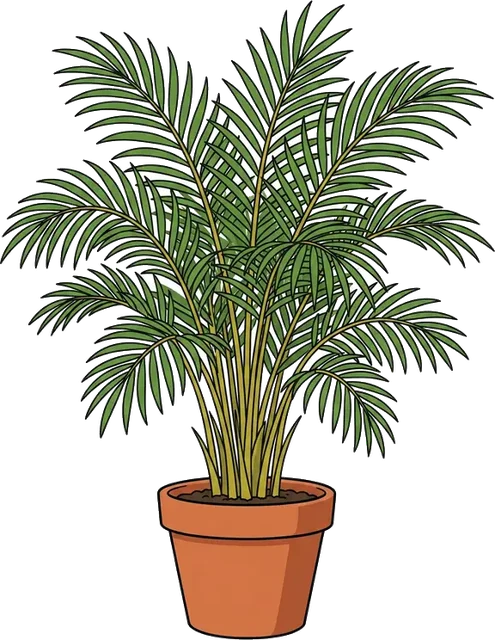
Areca palm
Dypsis lutescens, tree, evergreen
Water an areca palm when the soil is dry a few centimetres down, which indoors means every 4–12 days in summer and every 7–19 in winter. It wants full sun, as many hours as it can get, and starts to suffer below 15 °C (59 °F).
Updated 12 October 2026. How we write these pages
Areca palm at a glance
Water, indoors
4–12
days in summer
7–19
days in winter
When the soil is dry a few centimetres down.
Month by month
Minimum temperature
15 °C
It starts to suffer below 15 °C (59 °F).
Humidity
It likes humid air.
Cats and dogs
Not toxic to dogs or cats.
Eating a lot of it can still upset their stomach.
Growth
Steady. It’s a tree.
Feeding
Quite a lot while it’s growing.
Follow the dose and frequency on your fertiliser’s label.
Repotting
When the roots fill the pot.
Pruning
No regular pruning needed.
Where does your plant live?
Pick its place and see what changes.


What changes
- Indoors, near the window. The right spot: in front of the brightest window, with as many hours of sun as it can get.
- Indoors, away from the window. There isn’t enough light here. Move the pot in front of the brightest window.
- Outdoors, in the shade. Shade doesn’t give it enough light. Move the pot where the sun reaches it for longer.
- Outdoors, in the sun. The right spot, with all the sun it needs.
- Indoors, summer. In July it usually needs water every 4–12 days. Heat dries the soil faster, so feel it more often.
- Indoors, winter, heating on. In January it usually needs water every 7–19 days, and more often near a radiator, because warm air dries the soil.
- Indoors, winter, heating on. It likes humid air, and the heating dries it out. Stand the pot near other plants or on a tray of wet pebbles.
- Indoors, winter, cool room. In January it usually needs water every 7–19 days, and less often in a cool room, where the soil stays damp for a long time.
- Indoors, winter, cool room. It starts to suffer below 15 °C (59 °F), so the room has to stay warmer than that.
- Outdoors, summer. Outside the soil dries faster than indoors, where in July it needs water every 4–12 days, so in the sun feel it often.
- Outdoors, winter. It starts to suffer below 15 °C (59 °F). Bring the pot indoors before the first cold nights.
How often to water an areca palm
Indoors, month by month. Tap a column.
In October
Every 6–16 days
Usually every 10 days. Feel the soil first, and water when it is dry a few centimetres down.
Every month in a table
| Month | Usually | Usually between |
|---|---|---|
| January | every 12 days | 7–19 days |
| February | every 12 days | 7–19 days |
| March | every 11 days | 6–17 days |
| April | every 9 days | 6–15 days |
| May | every 8 days | 5–13 days |
| June | every 8 days | 4–12 days |
| July | every 8 days | 4–12 days |
| August | every 8 days | 4–12 days |
| September | every 8 days | 5–13 days |
| October | every 10 days | 6–16 days |
| November | every 11 days | 7–18 days |
| December | every 12 days | 7–19 days |
Typical intervals indoors in the northern hemisphere: light, the pot and the season stretch or shorten them. How to tell when to water, with a finger and the weight of the pot.
Soil, propagation and problems
Soil
An all-purpose potting mix that holds a little moisture but drains well: if it’s very dense, add some perlite. It likes it neutral or slightly acidic.
Propagation
By division: when you repot it, split the plant into pieces that each have their own roots.
Common problems
The most frequent: Scale insects · Whiteflies · Mealybugs · Thrips · Spider mites
When you feel the soil, look under the leaves too: pests show up there first.
Areca palm: questions and answers
How often should you water an areca palm in winter?
Indoors in January, usually every 12 days (between 7 and 19), compared with every 8 in July. The longest gaps run from December to February.
How can you tell when an areca palm needs water?
When the soil is dry a few centimetres down, not just on the surface.
How much light does an areca palm need?
As much sun as it can get. Full sun means at least 6 hours of direct sun a day, so indoors the right spot is in front of your brightest window.
Is an areca palm toxic to cats and dogs?
Not toxic to dogs or cats. Eating a lot of it can still upset their stomach.
How much cold can an areca palm take?
It starts to suffer from the cold below 15 °C (59 °F). If it spends the summer outside, bring the pot in before nights drop below 15 °C, and in winter keep it away from cold glass and draughts.
When should you repot an areca palm?
When the roots fill the pot. If needed, the best time is early spring.
Does an areca palm need pruning?
No, it doesn’t need regular pruning.
How can you tell if an areca palm is getting too much water or too little?
Too much water often shows as leaves turning yellow, soft brown patches on the leaves and leaves drooping even though the soil is wet. Too little shows as leaves drooping, leaves and buds dropping and young shoots drying out.
How much humidity does an areca palm need?
Wants humid air: indoors, keep it away from radiators and close to other plants, or on a tray of wet pebbles.
What soil does an areca palm need?
An all-purpose potting mix that holds a little moisture but drains well: if it’s very dense, add some perlite. It likes it neutral or slightly acidic.
How do you propagate an areca palm?
By division: when you repot it, split the plant into pieces that each have their own roots.
Which pests and diseases affect an areca palm?
The most frequent are scale insects, whiteflies, mealybugs, thrips and spider mites. When you feel the soil, look under the leaves too: pests show up there first.
Read next

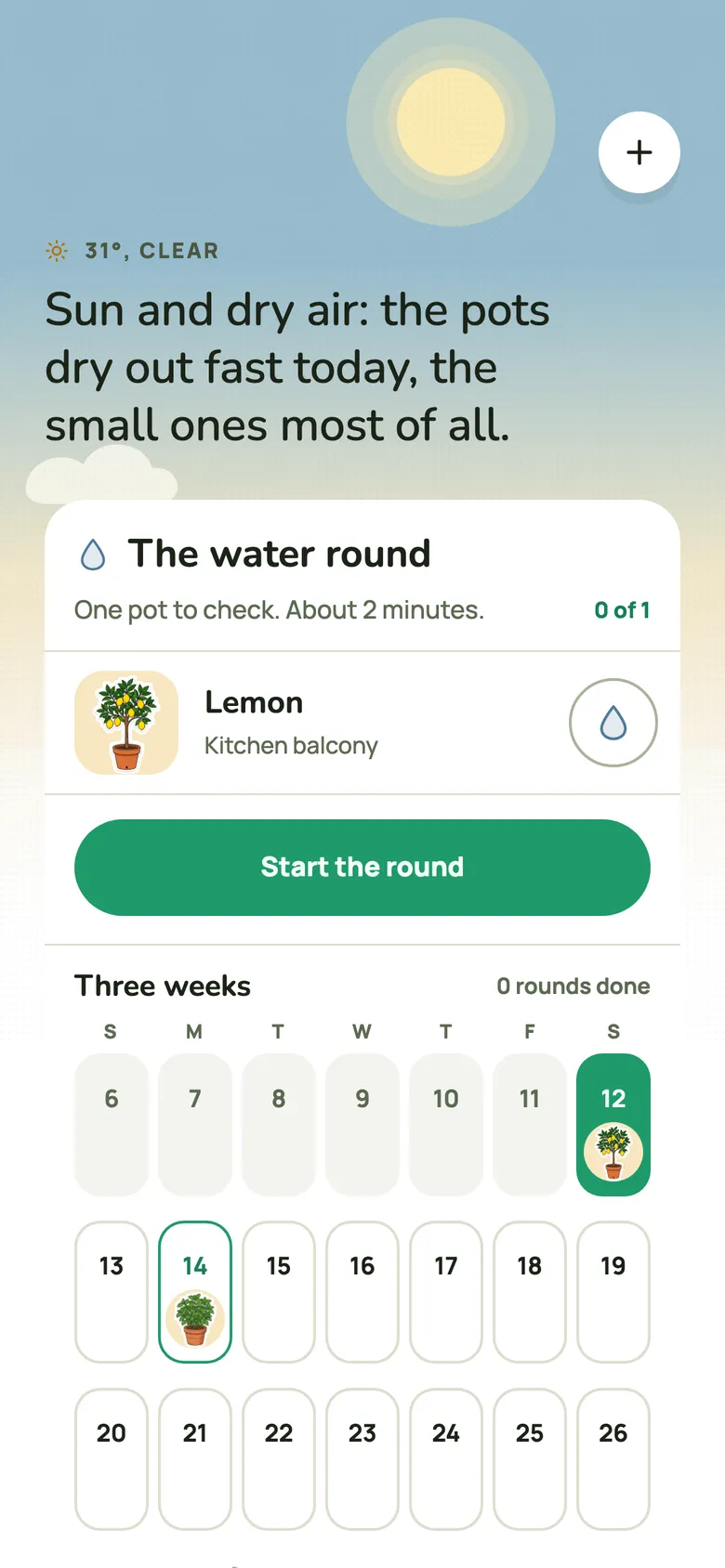
Every plant has its own rhythm. LINFA keeps track for you.
It looks at the light where your plant stands, its pot and the season, and tells you when to check it.
Coming soon to Android